How and when should I treat my young bee colony? I received them in May and treated them with oxalic acid (vaporize) on the second day. When and how often should I carry out the next treatment with oxalic acid? Last year I didn’t do any treatment and had an empty flight in October.
We treat each colony individually, based on what we observe. The best way is to check the bottom buckets for Varroa—especially the ones without a flight hole. Just empty the inlay and have a quick look. We now also offer a debris board to make this easier and faster. If you find more than 10 mites in both, it’s usually time to treat. Otherwise, keep an eye on flight activity and bee mortality. Having a second HIIVE for comparison is also very helpful—it shows you when one colony starts to weaken.
I checked a basket today and found 9-11 Varroa colony tanks and 5 dead bees. However, none of the bees had varroa mites on them. I have not emptied the basket since May when I introduced the bees. The colony is also strong. Should I treat with oxalic acid? Will this help at all or only in winter?
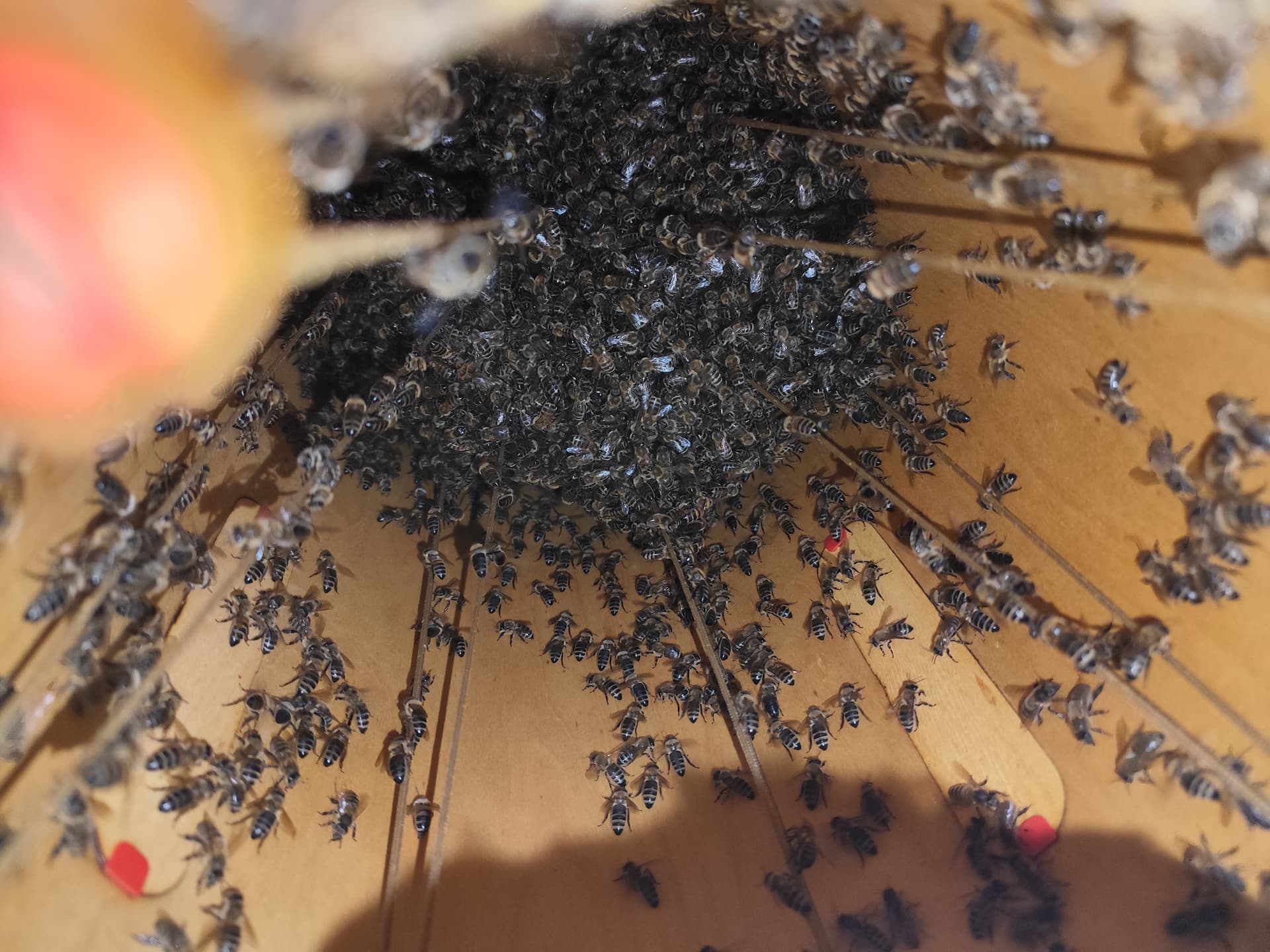
Hi Ronan,
you colony looks indeed strong. Did you treat Oxalic in the end? How did they make it through the winter?
Regarding oxalic acid vaporization:
Oxalic acid works best when the colony is broodless, because it does not penetrate capped brood. In summer, when brood is present, it will only affect phoretic mites on adult bees. That means it can reduce pressure, but it is usually not a complete treatment unless combined with a brood break.
If mite pressure is increasing, one option some beekeepers use is a so-called block treatment (several vaporisations at defined intervals to catch newly emerging mites). This can reduce pressure even when brood is present. However, timing and local recommendations matter, so it’s important to align with regional best practice.
Since you mentioned losing a colony in October last year, the critical period is usually late summer, when varroa levels peak. Staying ahead in August/September is often decisive.
Regards
Peter
I treated the bees with Thymovar. I placed it at the top of the honey chamber. So far, the bees have survived, and I was able to observe them flying this week. So this is what I did. When I let the bees into the hive in May, I treated them with oxalic acid (evaporation of powder) and at the end of August with Thymovar strips in the honey chamber. I’m curious to see how they get started in the spring.